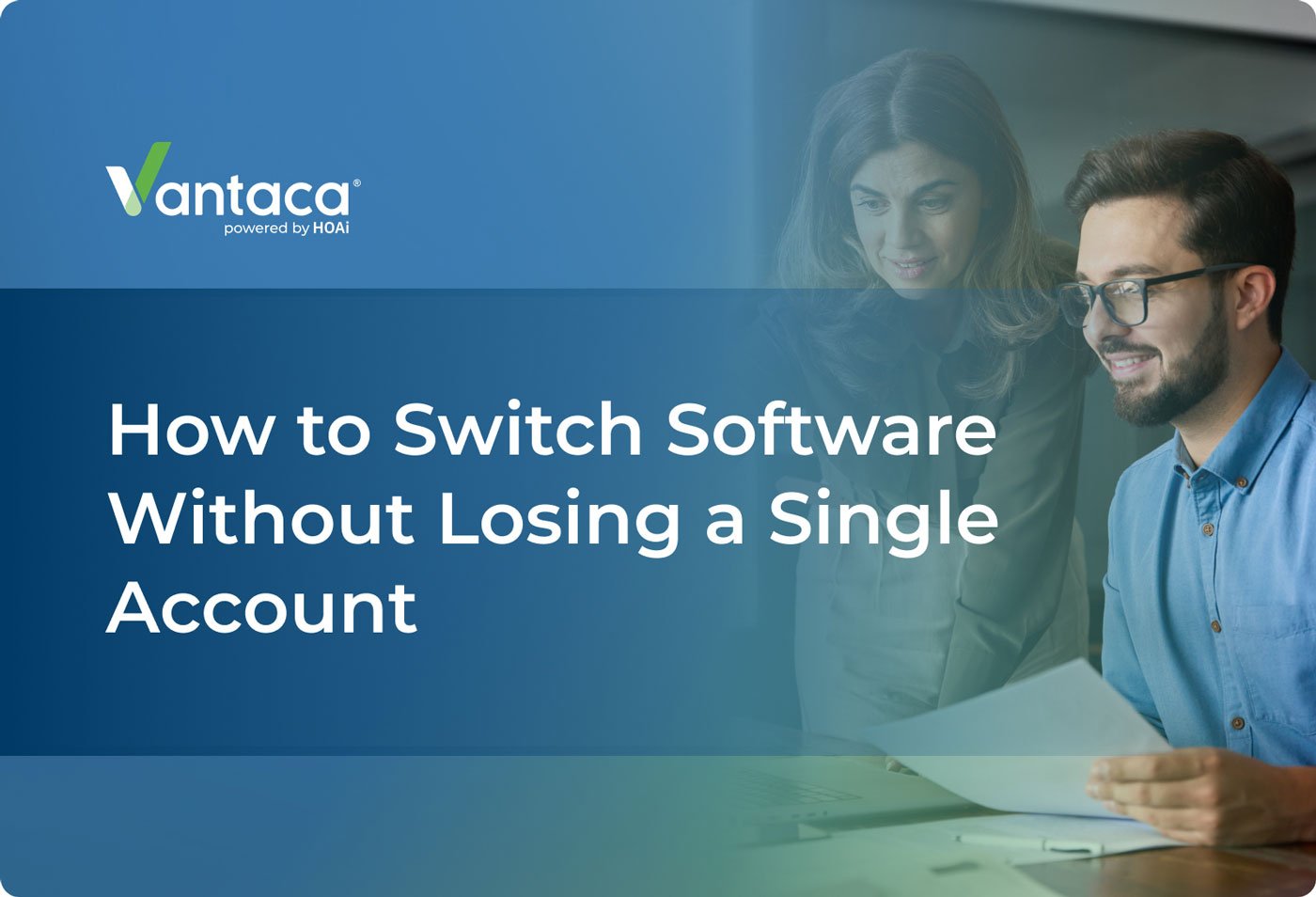
Whenever I mention the term "change management,” the natural reaction is for people to start looking for the door. We say that word “change” and the Community Manager we’re talking to just hears "everything is about to be more difficult for a few months." That’s probably because one of the biggest anxieties in this industry is the risk of losing accounts during a transition. There is a persistent fear that if the switch is not perfect, boards will use it as an excuse to look for a new management company. It’s a rational fear because everyone we work with today lives in their software - a critical component to making the 30% of managed communities in the country operate smoothly.
We recently hosted a webinar with a few of our customers to talk about their experience moving to a new platform. The conversation was refreshing because it stayed away from the “well what if it doesn’t work” and leaned into “this is going to make us stronger as an organization.” One of the most striking things I heard during the session was how these leaders handled the fear of moving. They focused on ignoring the roadblocks that come with fear of change and tackled it head on.
Winning the Board Before the Go-Live
They started with a board survey long before they even picked a date for the switch. The participants noted that they asked the boards what frustrated them or what they felt was missing from their current service. By the time they announced the new platform, they could frame it as a direct response to that feedback. They didn’t view changing software as optional. They shifted because the boards asked for better visibility and better communication.
They also hosted board-specific webinars before their go-live, taking the mystery out of the process. When the transition actually happened, they didn't lose a single account, which is a massive testament to the power of transparency.
The Internal Shift: Status Quo is Not Sustainable
Internally, the challenge is different. You are asking employees to break habits they’ve had for years. The consensus from our guest speakers was that you cannot frame the change as "management wanting a new tool." Instead, framing it as a necessity for survival and their growth as a business. They were honest with their teams: status quo simply wasn't sustainable.
To make this stick, they used "Module Champions." I love this move because it decentralizes the pressure. Instead of one person trying to know everything, they assigned specific areas of the software to different team members. One person owned the compliance module, another owned architectural reviews, and another handled the accounting side.
These champions became go-to experts for their peers. It turns out that people are much more comfortable asking a colleague for help than they are asking a supervisor. It builds a sense of collective ownership rather than a top-down mandate.
Real Wins That Changed the Workday
We talked a lot about early wins because momentum is everything when shifting software. One of the best examples was the monthly statement process. For one firm, getting statements out the door used to be a two-day manual grind. It was a cycle of printing, checking, and mailing that everyone dreaded.
After the transition, they moved to an automated "approve to print" workflow. What used to take forty-eight hours of manual labor now happens almost instantly. When a staff member realized they got two days of their life back every month, the "why" behind the software change became very clear.
We also touched on communication. The customers noted that their email response times were now trackable and message histories were tied directly to the homeowner record. This small win created a level of accountability that didn't exist before. Now, if a homeowner claims they’ve never heard back, the proof is visible. It protects the staff and provides a better experience for the resident. Win-Win.
Picking The Right Partner
If you take away one thing from this session or one idea from this piece, it’s that change should be viewed as a project, not a company altering event. By involving boards early, empowering internal champions, and focusing on the workflows that actually save people time, these firms came out stronger on the other side. As your partner, we’ll always be there to make sure you keep moving forward.


.png?length=360&name=Transform%20Your%20HOA%20Management%20with%20A%20Comprehensive%20HOA%20Software%20Solution%20Blog%20Banner%20(1).png)

(1).png?width=752&height=752&name=Vet100_seal_2023(RGB)(1).png)